Books matching: cultural revolution
100 result(s)
Readers also searched for:
- #1
 Save:
Save:'The Cultural Revolution: A People's History, 1962-1976' by Frank Dikotter provides a detailed account of the Cultural Revolution in China under Mao's rule. It delves into the societal upheaval orchestrated by Mao against his perceived enemies within the party and army, leading to mass social chaos and political purges. The author chronicles the events unfolding during this period, highlighting the manipulation of the masses and the authoritarian control exerted by Mao to maintain power. Through a narrative that combines firsthand accounts and historical analysis, the book exposes the dark and disturbing aspects of the Cultural Revolution, shedding light on how unchecked leadership can lead to devastating consequences within a society.
At the heart of Beijing, a vast, monolithic building with marble columns and pillars casts a shadow over Tiananmen Square, much as the Communist Party of China dominates the political life of the coun... Mao's Last Revolution is a detailed account of the Cultural Revolution and its aftermath, chronicling the betrayals, violence, suffering, and power struggles that characterized this tumultuous period in Chinese history. The authors provide an objective and unemotional narrative, allowing readers to draw their own conclusions from the events as they transpired. The book delves into the intricacies of Chinese politics, highlighting the impact of the revolution on the country as a whole, from the economy to the average citizen's daily life.
'Balzac and the Little Chinese Seamstress' by Dai Sijie is a novel set during the Cultural Revolution in China, focusing on two teenage boys who are sent to a remote village for re-education. They encounter the Little Chinese Seamstress, a tailor's daughter, and discover a stash of banned Western books that open their minds to new ideas and possibilities. The book explores themes of friendship, love, the power of literature, and the impact of forbidden knowledge in a repressive society.
The narrative of the book is described as engaging, with a focus on the transformative power of reading and storytelling. The story follows the protagonists as they navigate life in the village, their relationships with the Little Chinese Seamstress, and their discovery of Western literature that challenges their perspectives and leads to unexpected consequences. The writing style is praised for its simplicity, humor, and ability to evoke the setting of rural China during a tumultuous period in history.
Four-Eyes had a secret suitcase, which he kept carefully hidden. He was our friend. (Remember? We were on our way to see him when we had our encounter with the tailor on the mountain path.) The villag...- #4
 Save:
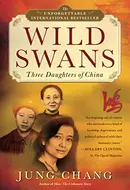
Save:Wild Swans: Three Daughters of China by Jung Chang is a multi-generational memoir that follows the lives of three Chinese women across different periods of China's tumultuous history. The book provides a sweeping narrative of the challenges faced under Communist leadership, the horrors of the Cultural Revolution, and the personal struggles and triumphs of a family living through decades of upheaval. Through the lens of one family, the author paints a vivid picture of China's transformation from a feudal kingdom to a modern state, capturing the hopes, struggles, and resilience of generations of Chinese women.
At the age of fifteen my grandmother became the concubine of a warlord general, the police chief of a tenuous national government of China. The year was 1924 and China was in chaos. Much of it, includ... - #5
 Save:
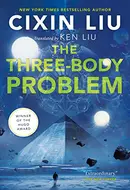
Save:The Three-Body Problem by Liu Cixin is a hard science fiction novel that delves into the discovery of another race in our galaxy, challenging the basic principles of modern physics. Set in China during the Cultural Revolution, the book follows Chinese astrophysicist Ye as she tries to prevent a global catastrophe with possible extraterrestrial origins. The writing style incorporates elements of Chinese culture and history, offering a fresh perspective on sci-fi and blending imaginative scientific concepts with societal reflections.
The Red Union commander was anxious, though not because of the defenders he faced. The more than two hundred Red Guards of the April Twenty-eighth Brigade were mere greenhorns compared with the vetera... - #6
 Save:
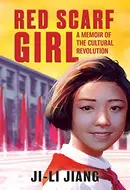
Save:'Red Scarf Girl' by Ji-li Jiang is a memoir that chronicles the life of a young girl, Ji Li, during the Cultural Revolution in China. Ji Li starts off as an enthusiastic supporter of Mao's ideas but soon realizes the harsh realities of the revolution as her family is targeted due to their class status. The book portrays Ji Li's struggles with her loyalty to her family and the pressure to conform to the government's ideology, ultimately leading to difficult choices and sacrifices. The writing style is engaging and simple, effectively conveying the confusion, fear, and emotional turmoil experienced by a child living under a dictatorship.
Chairman Mao, our beloved leader, smiled down at us from his place above the blackboard. The sounds and smells of the tantalizing May afternoon drifted in through the window. The sweet breeze carried ... - #7
 Save:
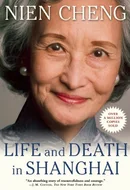
Save:Life and Death in Shanghai by Nien Cheng is a memoir that portrays the author's harrowing experiences living under Communist rule in China during the Cultural Revolution. Cheng, a wealthy widow and former employee of Shell Oil, is unjustly imprisoned as a spy, enduring years of deprivation and injustice. The book provides a unique perspective on the turmoil in China during the Mao Tze tung years, showcasing the author's resilience, intelligence, and unwavering declarations of innocence. Cheng's storytelling is characterized by a blend of personal narrative and historical context, offering readers a deeper understanding of the complexities of Communist China at the time.
Cheng's narrative style is described as unsentimental yet compelling, providing a logical analysis of the events she witnessed while maintaining a sense of objectivity. The book delves into the violence and cruelty of the Cultural Revolution, shedding light on the struggles faced by Cheng and many others during that tumultuous period. Through detailed accounts of her imprisonment, interrogations, and mistreatment, Cheng's story emerges as a testament to courage, determination, and survival in the face of adversity.
THE PAST IS FOREVER with me and I remember it all. I now move back in time and space to a hot summer’s night in July 1966, to the study of my old home in Shanghai. My daughter was asleep in her bedroo... - #8
 Save:
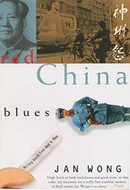
Save:Jan Wong's 'Red China Blues' is a captivating memoir that chronicles her journey from being an enthusiastic young activist leaving Canada for Maoist China to her realization of the harsh realities of Communist China. Through her personal experiences as a student and reporter in Beijing, Wong provides deep insights into the Cultural Revolution, the Tiananmen Square massacre, and the economic changes under Deng Xiaoping. Her writing style combines humor, honesty, and firsthand accounts, offering readers a unique perspective on China during Mao's era and beyond.
I was nineteen, on my college summer vacation, and I had a coveted visa to the People’s Republic of China. It was a silly question, but I really had no idea what Communists did at night. I already had... 'The Battle for China's Past: Mao and the Cultural Revolution' by Mobo C.F. Gao delves into a detailed analysis of the Cultural Revolution in China under Mao's leadership. Gao passionately defends the successes of the Cultural Revolution, especially in the Chinese countryside, while criticizing popular historical works that portray Mao negatively. challenges the prevailing anti-Mao consensus among specialists and popular views, providing a fresh perspective on this controversial period in Chinese history. Gao's writing style combines scholarly research with firsthand experiences, offering a nuanced exploration of the complexities surrounding Mao's rule and the impact of the Cultural Revolution.
- #10
 Save:
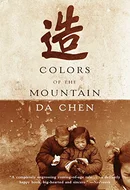
Save:"Colors of the Mountain" by Da Chen is a memoir that narrates the author's experiences growing up during the Cultural Revolution in China. Da Chen describes the challenges he faced as a landlord's grandson, the struggles his family endured, and his determination to pursue education despite the hardships he encountered. The narrative provides insight into the societal changes brought about by Chairman Mao's reign and the impact it had on individuals, highlighting themes of resilience, perseverance, and the pursuit of a better life.
I WAS BORN in southern China in 1962, in the tiny town of Yellow Stone. They called it the Year of Great Starvation. Chairman Mao had had a parting of the ways with the Soviets, and now they wanted al...